
Top Network Security Challenges Businesses Face Today
Introduction
In today’s connected business environment, networks play a critical role in daily operations. From communication and collaboration to cloud applications and customer data management, organizations depend on secure and reliable networks to maintain productivity and business continuity.
However, as technology continues to evolve, cyber threats targeting business networks are becoming increasingly sophisticated. Without proper network security measures, organizations may face data breaches, operational disruptions, financial losses, and reputational damage.
Understanding the most common network security challenges can help businesses strengthen their defenses and reduce potential risks.
What is Network Security?
Network security refers to the processes, technologies, and policies used to protect computer networks from unauthorized access, cyber threats, and security vulnerabilities.
A strong network security strategy helps organizations:
- Protect sensitive business data
- Prevent cyber attacks
- Ensure business continuity
- Maintain regulatory compliance
- Improve overall IT security
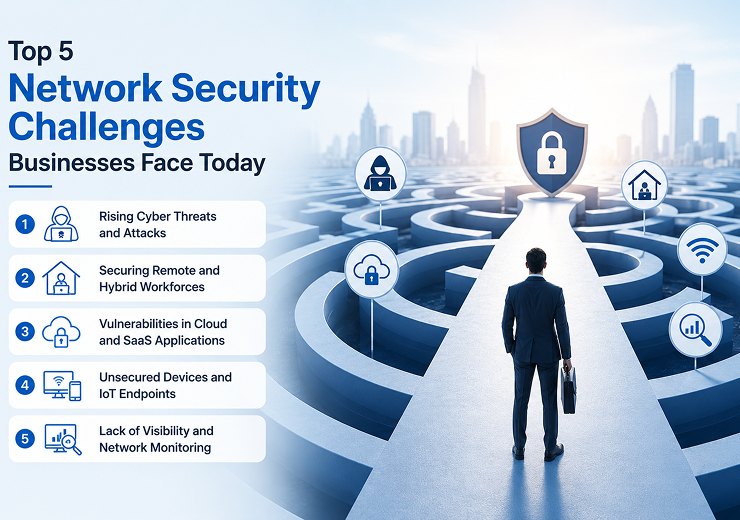
Common Network Security Challenges
- Increasing Cyber Attacks
Cybercriminals are continuously developing new attack methods to exploit network vulnerabilities. Businesses face threats such as ransomware, phishing, malware, and distributed denial-of-service (DDoS) attacks.
These attacks can:
- Disrupt business operations
- Compromise sensitive data
- Cause financial losses
- Damage brand reputation
Organizations must implement proactive security measures to identify and prevent attacks before they cause significant harm.
- Unauthorized Access
Unauthorized access remains one of the biggest security concerns for businesses. Weak passwords, poor access controls, and compromised user accounts can provide attackers with entry into business networks.
Best practices include:
- Multi-factor authentication (MFA)
- Strong password policies
- Role-based access control
- Regular access reviews
- Remote Work Security Risks
Remote and hybrid work environments have expanded the network perimeter beyond traditional office locations.
Common remote work security challenges include:
- Unsecured Wi-Fi networks
- Personal device usage
- Weak remote access controls
- Data leakage risks
Businesses should secure remote access through VPNs, endpoint protection, and user awareness training.
- Insider Threats
Not all security threats originate from external attackers. Employees, contractors, or partners may accidentally or intentionally compromise network security.
Examples include:
- Sharing sensitive information
- Misconfigured systems
- Unauthorized software installation
- Negligent security practices
Regular training and monitoring help reduce insider security risks.
- Network Vulnerabilities
Outdated systems, unpatched software, and misconfigured devices can create vulnerabilities within business networks.
To address these issues, organizations should:
- Conduct regular security assessments
- Apply security patches promptly
- Monitor network performance
- Maintain updated security policies
- Lack of Network Visibility
Many businesses struggle to maintain complete visibility across their IT infrastructure.
Without proper monitoring, organizations may not detect:
- Suspicious activities
- Unauthorized devices
- Security incidents
- Performance issues
Continuous network monitoring enables faster threat detection and response.
- Data Breaches
Data breaches can expose confidential customer information, financial records, and sensitive business data.
Consequences of data breaches include:
- Financial penalties
- Legal liabilities
- Customer trust issues
- Business disruption
Strong network security controls help prevent unauthorized access to critical information.
How Businesses Can Improve Network Security
Implement Firewall Protection
Firewalls serve as the first line of defense by controlling incoming and outgoing network traffic.
Benefits include:
- Blocking malicious traffic
- Preventing unauthorized access
- Improving network security
Enable Continuous Monitoring
24/7 network monitoring helps identify suspicious activities before they become serious security incidents.
Monitoring solutions provide:
- Real-time threat detection
- Performance tracking
- Security alerts
- Incident response support
Regular Security Audits
Periodic network security assessments help identify vulnerabilities and improve security posture.
Security audits support:
- Risk identification
- Compliance requirements
- Security improvements
- Threat prevention
Employee Security Awareness
Employees play an important role in protecting business networks.
Training programs should focus on:
- Phishing awareness
- Password security
- Safe browsing practices
- Incident reporting procedures
Benefits of Professional Network Security Services
Partnering with network security experts helps businesses strengthen their IT environment and reduce security risks.
Key benefits include:
Enhanced Threat Protection
Advanced security solutions protect against evolving cyber threats.
Improved Network Performance
Secure networks often perform more efficiently and reliably.
Reduced Downtime
Proactive monitoring minimizes disruptions and operational risks.
Better Compliance
Professional security management helps businesses meet industry regulations and standards.
Conclusion
Network security is a critical component of modern business operations. As cyber threats continue to evolve, organizations must take proactive steps to secure their networks, protect sensitive information, and maintain business continuity.
By implementing strong security measures, conducting regular assessments, and partnering with experienced security professionals, businesses can reduce risks and build a secure foundation for long-term growth.